
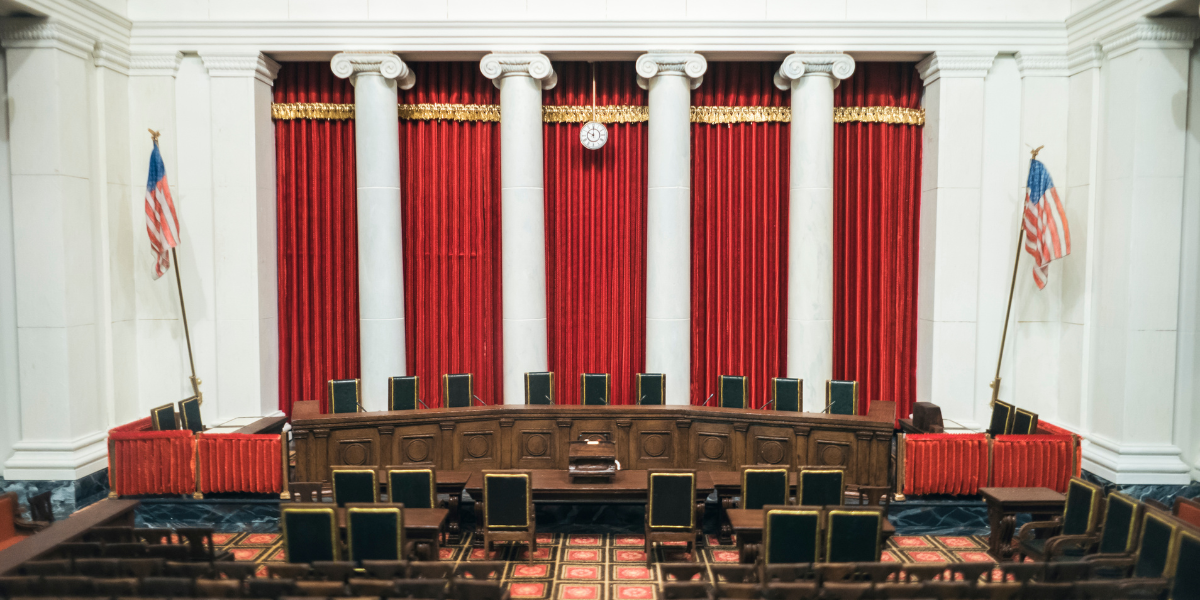
As the Supreme Court of the United States (SCOTUS) advances through its 2025–26 term, the federal judiciary has entered a consequential period marked by major constitutional questions, evolving interpretations of federal authority, and significant appellate rulings. While February 28, 2026, did not bring the release of a single landmark opinion, the cumulative developments across the Supreme Court and federal appellate courts reflect a pivotal moment in American jurisprudence.
The Supreme Court’s 2025–26 Term: Defining Institutional Boundaries
The current term has drawn substantial attention for cases addressing the scope of executive power, constitutional protections, and the limits of congressional delegation. Among the most closely watched developments has been the Court’s examination of presidential authority under the International Emergency Economic Powers Act (IEEPA). In reviewing the statutory framework, the Court clarified that unilateral executive actions involving trade measures require clear congressional authorization. The decision reinforces longstanding separation-of-powers principles and signals the Court’s continued scrutiny of expansive interpretations of executive authority.
Beyond matters involving federal economic authority, the Court’s docket includes high-profile disputes concerning voting rights, First Amendment protections, and equal protection claims. In Louisiana v. Callais, the Court is considering whether congressional redistricting maps comply with the Voting Rights Act and constitutional equal protection standards. The case carries implications for how federal courts assess districting challenges and the evidentiary thresholds required in such disputes.
Another closely followed case, Chiles v. Salazar, examines the intersection of professional regulation and free speech rights. The Court is evaluating whether state-imposed restrictions on certain counseling practices violate the First Amendment. The outcome could clarify how courts balance state regulatory authority against speech protections in professional contexts.
Additionally, Little v. Hecox addresses equal protection principles in the context of state athletic participation laws. The Court’s review may shape future constitutional analysis concerning classification standards and the degree of scrutiny applied in similar cases.
Collectively, these matters underscore the Supreme Court’s central role in defining constitutional limits on legislative and executive power while clarifying individual rights protections.
Federal Appellate Courts Shape Key Areas of Law
Parallel to Supreme Court activity, the U.S. Courts of Appeals have issued consequential rulings in intellectual property, civil rights, and procedural law. The U.S. Court of Appeals for the Federal Circuit, in particular, has played a prominent role in shaping patent jurisprudence. Recent decisions addressing patent validity, post-grant review procedures, and inventorship disputes have clarified evidentiary standards and procedural safeguards in complex technology litigation.
These rulings are especially significant for corporate counsel and innovation-driven industries, as they influence patent enforcement strategies and risk assessments. By refining the standards governing Patent Trial and Appeal Board (PTAB) reviews and district court proceedings, appellate decisions are providing clearer guidance for litigants navigating high-stakes intellectual property disputes.
Federal district courts have also continued to address constitutional claims and civil rights litigation. Settlements and rulings involving prisoner rights, procedural fairness, and government accountability demonstrate the judiciary’s ongoing role in enforcing constitutional protections at multiple levels of the federal court system.
Broader Implications for Legal Practice
The developments unfolding during this term reflect several enduring themes in federal jurisprudence. First, courts remain vigilant in preserving structural constitutional principles, particularly the balance of power among branches of government. Second, the judiciary continues to serve as the forum for resolving complex tensions between regulatory authority and constitutional freedoms.
For practitioners, the significance of this period extends beyond individual case outcomes. Attorneys advising clients in regulatory compliance, constitutional litigation, corporate governance, and intellectual property must closely monitor how appellate reasoning evolves. Even incremental doctrinal shifts can alter litigation strategies, compliance obligations, and risk exposure.
Legal scholars have also observed that the Court’s current trajectory may shape long-term jurisprudential trends, particularly in administrative law and equal protection analysis. As opinions are issued in the coming months, their reasoning will likely influence lower courts and future legislative drafting.
Key Takeaways
As February 2026 concludes, the Supreme Court and federal judiciary stand at a critical juncture. Although the term is still ongoing, the cases under consideration highlight fundamental questions about executive authority, constitutional safeguards, and federal oversight.
For legal professionals and observers, the central takeaway is clear: the remainder of the 2025–26 term may yield decisions with lasting doctrinal impact. Staying informed on these proceedings is essential for understanding how federal courts continue to define the contours of American law.