
Beyond Interpretation: A Study in Legal Analysis

An analytical review of Kenneth Carnesi Sr.’s approach to legal reasoning, research, and judicial scholarship.
A Structured Approach to Legal Analysis
A strong legal book does more than present information. It gives readers a method for thinking about difficult questions, separating evidence from assumption and doctrine from commentary. In Beyond Interpretation, Kenneth Carnesi Sr., JD, takes that approach by examining how legal arguments are constructed, evaluated, and understood. Rather than relying on simple conclusions, the book encourages readers to examine reasoning, precedent, institutional principles, and the development of legal thought.
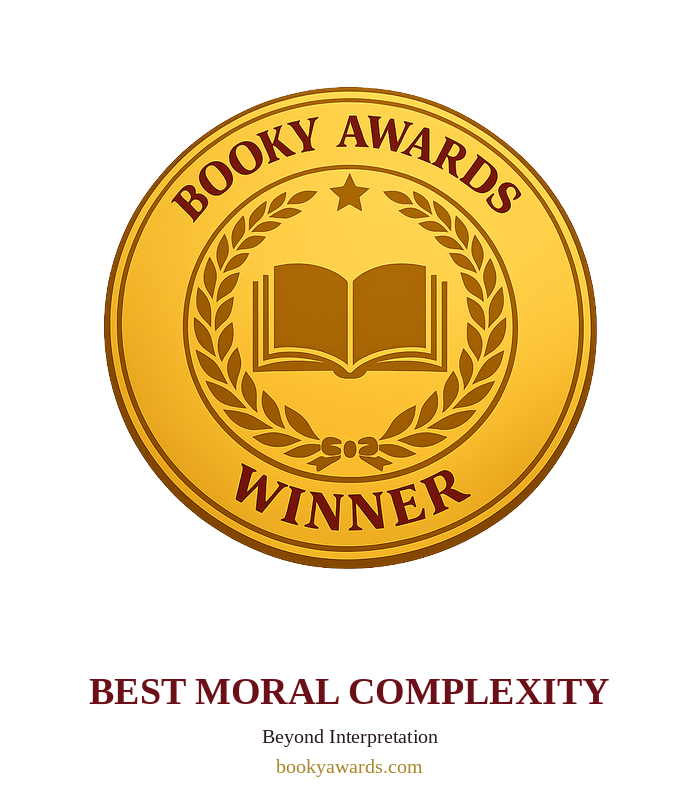
That willingness to examine difficult questions from multiple perspectives has also earned Beyond Interpretation recognition beyond the legal scholarship community. The book recently received a Booky Award for Best Moral Complexity in Non-Fiction Political Commentary, a recognition that aligns with its engagement with difficult issues and its refusal to reduce complex questions to simple conclusions.
One of the book’s notable strengths is its emphasis on definitions. Legal terminology can appear precise while carrying different meanings depending on context. Carnesi addresses that challenge by examining the competing ways important legal concepts can be understood. This approach gives readers a useful reminder that sound analysis begins with establishing what a term means before deciding whether a particular argument satisfies it.
Why Method Matters in Legal Scholarship
Carnesi’s method is particularly valuable because the book treats legal analysis as a process rather than a collection of conclusions. Each subject is approached through background information, legal reasoning, competing interpretations, and broader implications. This structure allows readers to follow the development of an argument instead of encountering only its final position.
That distinction matters for students and professionals alike. Legal scholarship often requires readers to consider multiple interpretations before determining which argument is most persuasive. By presenting competing perspectives in an organized manner, Beyond Interpretation demonstrates how careful examination can produce a more complete understanding of complex material.
The book also shows the value of studying legal questions within their broader doctrinal context. Individual decisions and arguments rarely exist in isolation. They develop from earlier principles, respond to previous interpretations, and can influence subsequent legal thinking. Carnesi’s approach gives readers a framework for recognizing those connections.
Clarity Without Oversimplification
Another strength is the book’s accessible presentation. Legal subjects can quickly become difficult to follow when discussions depend heavily on technical terminology or lengthy explanations. Carnesi instead focuses on identifying the central analytical issues and explaining why they matter.
That balance is useful for readers who have different levels of legal experience. Attorneys and legal researchers can engage with the underlying analysis, while students and general readers can use the explanations as an introduction to more sophisticated legal concepts. The result is a work that takes its subject seriously without requiring every reader to approach it as a specialist.
The writing also benefits from a measured tone. Complex legal questions rarely benefit from exaggerated language. By emphasizing analysis and evidence, the book creates room for readers to examine arguments independently. That quality strengthens its value as a reference for readers who want to develop their own analytical skills.
A Useful Framework for Readers
Perhaps the most practical contribution of Beyond Interpretation is its potential as a framework for evaluating legal arguments. Readers can apply its method beyond the specific material discussed in the book by asking several basic questions: What is the underlying issue? What principles are being applied? What reasoning supports each interpretation? How does the argument relate to established doctrine? What assumptions influence the conclusion?
These questions are useful because they shift attention from the appeal of an argument to its construction. They encourage readers to identify evidence, test reasoning, and recognize where different interpretations begin to diverge.
For law students, this can be particularly valuable. Developing the ability to distinguish a strong legal argument from a persuasive sounding one is an important part of legal education. The same principle applies to professionals who regularly evaluate legal documents, research, or commentary.
Scholarship Designed to Encourage Independent Thought
Carnesi’s work ultimately succeeds by encouraging readers to become more careful evaluators of legal ideas. Instead of treating legal scholarship as a series of predetermined answers, Beyond Interpretation presents analysis as an ongoing process of examination and comparison.
That approach gives the book relevance beyond a single legal discussion. Its emphasis on structure, definitions, precedent, and reasoning can help readers develop a more disciplined way of approaching complicated material. For professionals, it offers a framework for deeper research. For students, it provides a useful model for organizing legal analysis. For general readers interested in the way legal arguments are constructed, it offers an accessible entry point.
Beyond Interpretation is therefore best understood not simply as a book about individual legal questions, but as a study in how those questions can be examined. Its greatest value lies in its method: slow down, establish the terms, examine the reasoning, consider competing interpretations, and reach conclusions based on analysis rather than assumption.
Readers interested in strengthening their understanding of legal reasoning and developing a more structured approach to complex legal material may find Beyond Interpretation a worthwhile addition to their reading list. The book offers an opportunity to engage with legal scholarship while developing a practical framework for evaluating arguments with greater clarity, context, and confidence.
To discover more of Kenneth Carnesi, Sr.’s work, visit KennethCarnesiAuthor.com, browse his published books at Books.by/Kenneth-Carnesi-Sr, and follow his latest updates on Instagram and LinkedIn.

Juris Review Contributor
Covers legal news and the politics of the law, following legislation, enforcement, and the debate around both.
This article features partner, contributor, or branded content from a third party. Members of the Juris Review editorial staff were not involved in the creation of this content. All views and opinions are those of the contributor alone.