Supreme Court Examines Federal Labor Department's Enforcement Authority
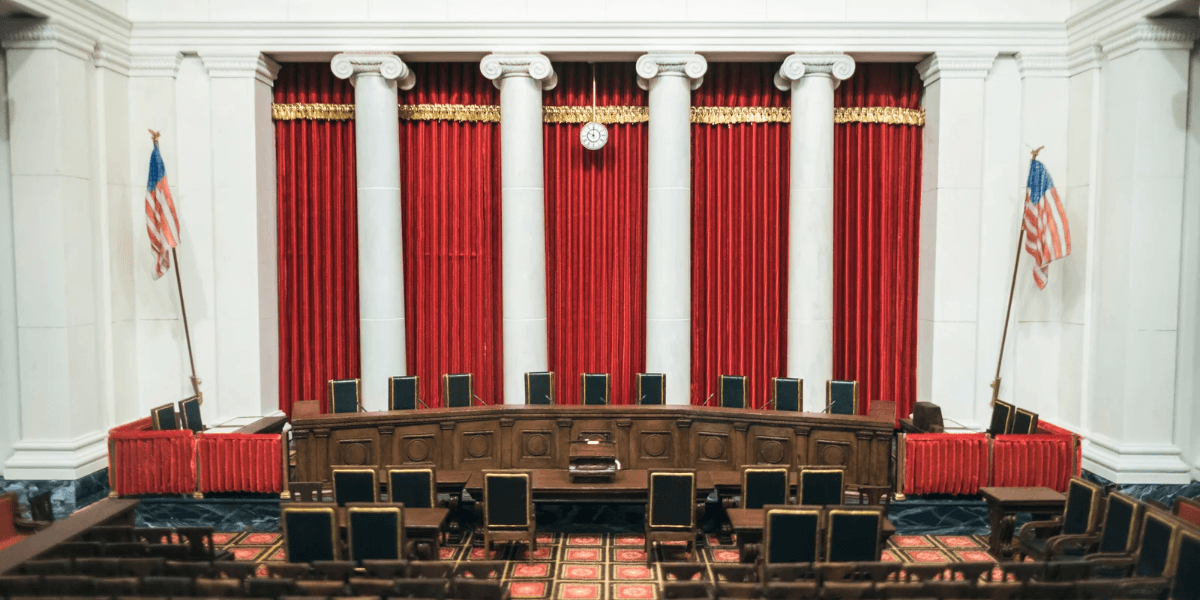
The Supreme Court examines whether federal labor officials can impose employment penalties without first bringing disputes before federal judges.*
The U.S. Supreme Court heard arguments on November 10, 2026, in a closely watched dispute over the authority of the Department of Labor to impose financial penalties on employers through its own administrative proceedings. The case, Department of Labor v. Sun Valley Orchards, LLC, raises important constitutional questions about federal agency power, the role of independent courts, and the rights of businesses facing government enforcement actions.
The dispute involves a New Jersey agricultural business accused of violating employment requirements under the federal H-2A temporary agricultural worker program. However, the case extends beyond one employer. Its outcome could influence how federal agencies enforce labor regulations and determine financial penalties across industries.
The Background of the Sun Valley Orchards Case
The dispute began after the Department of Labor investigated Sun Valley Orchards, a New Jersey farm that employed foreign agricultural workers through the H-2A program in 2015.
The program allows eligible U.S. employers to hire foreign workers temporarily for agricultural jobs when they meet federal requirements. Participating employers must follow specific rules concerning wages, housing, transportation, meals, and other employment conditions.
Following its investigation, the Department of Labor concluded that Sun Valley Orchards had violated several program requirements. The allegations included inadequate worker housing, transportation problems, improper wage deductions, and failures involving promised employment conditions.
The department's administrative proceedings resulted in an order requiring the farm to pay $211,800 in civil penalties and $344,945.80 in back wages.
Sun Valley Orchards challenged the government's enforcement process. The company argued that the department should not have the authority to determine these financial obligations through its internal administrative system without providing access to an independent federal court.
The dispute eventually reached the U.S. Court of Appeals for the Third Circuit, which ruled in favor of the farm on the constitutional issue. The federal government subsequently asked the Supreme Court to review that decision.
The Constitutional Question Before the Justices
The central issue concerns Article III of the U.S. Constitution, which establishes the federal judiciary and defines the judicial power of the United States.
The Supreme Court must consider whether Congress can authorize the Department of Labor to initially adjudicate proceedings seeking monetary penalties and back wages from employers accused of violating H-2A employment requirements.
The case also raises a question about the interpretation of Section 1188(g)(2) of federal immigration law. Specifically, the justices must determine whether this provision gives the Department of Labor statutory authority to conduct these proceedings.
The distinction matters because federal agencies frequently investigate alleged regulatory violations and impose administrative penalties. However, constitutional limits govern which disputes Congress may assign to administrative bodies rather than federal courts.
Sun Valley Orchards maintains that the financial claims resemble traditional disputes between private parties. Its position is that such claims should receive consideration through the federal judicial system.
The government, meanwhile, argues that the H-2A program involves public regulatory responsibilities that Congress can assign to the Department of Labor. It maintains that the agency needs authority to enforce the employment conditions attached to participation in the program.
Why the Supreme Court Hearing Matters
The November 10 hearing places the relationship between administrative agencies and federal courts under renewed examination.
For decades, federal agencies have relied on administrative law judges to handle certain regulatory disputes. These proceedings can allow agencies to investigate violations, evaluate evidence, and determine appropriate penalties under congressional authorization.
However, questions about the constitutional limits of this authority have become increasingly important following recent Supreme Court decisions.
One significant precedent is SEC v. Jarkesy, decided in June 2024. In that case, the Supreme Court ruled that defendants facing certain civil fraud penalties from the Securities and Exchange Commission were entitled to a jury trial under the Seventh Amendment.
Although the Sun Valley Orchards dispute involves a different federal program, both cases raise questions about when agencies may impose financial penalties without using traditional federal court proceedings.
The justices must determine whether the legal principles involved in those earlier decisions apply to the Department of Labor's enforcement authority under the H-2A program.
Potential Implications for Employers and Federal Agencies
The Supreme Court's eventual decision could have consequences for employers, workers, and government agencies.
For businesses, the ruling may clarify the procedures the Department of Labor must follow when seeking financial remedies for alleged employment violations.
For federal regulators, the decision could establish important boundaries around the use of administrative proceedings. Agencies may need to reassess their enforcement procedures depending on how the justices interpret constitutional and statutory requirements.
Workers could also be affected. The Department of Labor uses enforcement mechanisms to address alleged violations involving wages and employment conditions. Changes to those procedures could influence how quickly and through which institutions claims are resolved.
Importantly, the case does not determine whether the H-2A employment requirements themselves are valid. Instead, it focuses on which institution has the authority to initially decide disputes and impose monetary remedies.
What Happens After the November 10 Hearing?
The November 10 proceeding was an oral argument, not a final ruling. The justices heard presentations from representatives of the federal government and Sun Valley Orchards before considering the legal questions.
The Court will issue its decision at a later date. Until then, the constitutional and statutory questions remain unresolved.
Legal observers will be watching for clarification on three important issues: the limits of congressional authority to assign disputes to administrative agencies, the scope of Article III protections, and the Department of Labor's enforcement powers under the H-2A program.
A Significant Case for Administrative Law
Department of Labor v. Sun Valley Orchards, LLC represents an important examination of the balance between federal regulatory authority and constitutional judicial protections.
Although the dispute originated in agricultural employment, its broader implications concern the structure of federal enforcement across the United States.
The Supreme Court's decision could help define when administrative agencies may independently determine financial penalties and when disputes must instead proceed through federal courts.
For employers, workers, regulators, and legal professionals, the case offers an important reminder that the authority to enforce federal regulations remains subject to constitutional limits. Its eventual resolution could shape the future relationship between administrative agencies and the federal judiciary.

Juris Review Contributor
Covers legal news and the politics of the law, following legislation, enforcement, and the debate around both.
This article features partner, contributor, or branded content from a third party. Members of the Juris Review editorial staff were not involved in the creation of this content. All views and opinions are those of the contributor alone.