
Why Construction Disputes Are Often Won or Lost in the Project Documents

For attorneys, the project record can reveal what happened, when it happened, and whether a construction claim is supportable.
Every construction dispute raises the same fundamental question: What actually happened on the project? For attorneys handling construction litigation, arbitration, mediation, or prelitigation claims, answering that question often requires more than reviewing the pleadings. The evidence is usually distributed across contracts, drawings, specifications, change orders, schedules, RFIs, payment applications, daily reports, photographs, and correspondence.
That is where Robert Hession, Founder and Principal of RFH Partners, LLC, brings a practical advantage. Hession has more than 36 years of hands-on construction and executive leadership experience. Before founding RFH Partners, he spent more than 25 years with J.A. Jennings, Inc., ultimately serving as Executive Vice President with responsibility for more than $50 million in construction work annually. His experience includes healthcare, corporate interiors, institutional facilities, high-security environments, occupied renovations, and residential construction.
RFH Partners provides construction expert witness and advisory services nationwide in both commercial and residential matters. The firm applies practical construction experience to matters involving construction defects, contractor and construction manager standard of care, contractor performance, change orders and extra work, schedule and delay issues, payment applications, cost overruns, cost-to-complete, corrective work, and project documentation.
The Record Can Shape the Case
Construction claims often develop through a sequence of events rather than one isolated problem. A scope change may lead to a change order. A design revision may affect sequencing. A field condition may create additional work. A delay allegation may depend on what the schedule showed before and after the event.
For counsel, reconstructing that sequence is critical.
The American Bar Association has noted that routine construction records, including schedules, daily reports, monthly progress reports, change-order logs, photographs, payment applications, and inspection records, can provide important information when evaluating project performance and potential claims. Reviewing these records together can help identify trends, discrepancies, and issues that may require further investigation.
According to Arcadis' 2024 Global Construction Disputes Report, the average North American construction dispute value reached $43 million in its 2023 data, while the average dispute lasted 14.4 months. The report also identified errors and omissions in contract documents among the leading causes of disputes.
These findings underscore why the underlying project record deserves careful attention before counsel evaluates questions involving cause, responsibility, cost, or delay.
How a Construction Record Is Reconstructed
Consider a construction dispute involving alleged defects, incomplete or nonconforming work, disputed change orders, schedule issues, and corrective costs.
In such an engagement, RFH Partners may receive thousands of pages of project records. The challenge is not simply locating documents. It is determining how they fit together.
The review can begin with the contract and original scope, followed by drawings and specifications. RFIs and submittals can show how questions were addressed during construction. Change orders can establish how scope evolved. Schedules and updates can help establish the sequence of work. Daily reports, meeting minutes, photographs, and correspondence can then be compared against those records to determine what was occurring in the field.
The resulting analysis can help counsel understand which facts are documented, which issues remain disputed, and where the record may support or fail to support a particular position.
Just as important, the review may identify inconsistencies between schedules, payment applications, change orders, meeting minutes, photographs, correspondence, and what was actually observed in the field. Those inconsistencies can require as much attention as the records that agree.
RFH Partners describes this approach simply: understand the contract, understand the documents, understand what happened in the field, and connect those facts in a clear and supportable manner.
Why Contemporaneous Records Matter
A construction dispute can become more difficult when the project record does not clearly establish what happened at the time of the event.
In its 2026 discussion of construction experts and project records, the American Bar Association highlights the importance of contemporaneous materials such as daily logs, progress reports, meeting minutes, RFIs, photographs, and correspondence in establishing a defensible narrative of project events and claimed impacts.
For attorneys, that distinction can matter when evaluating expert opinions, preparing depositions, testing damages claims, or assessing whether a position is supported by objective project evidence.
RFH Partners therefore focuses on connecting the documentation to actual construction conditions. The objective is not to advocate for a predetermined conclusion. It is to provide an independent assessment grounded in the available evidence and practical construction experience.
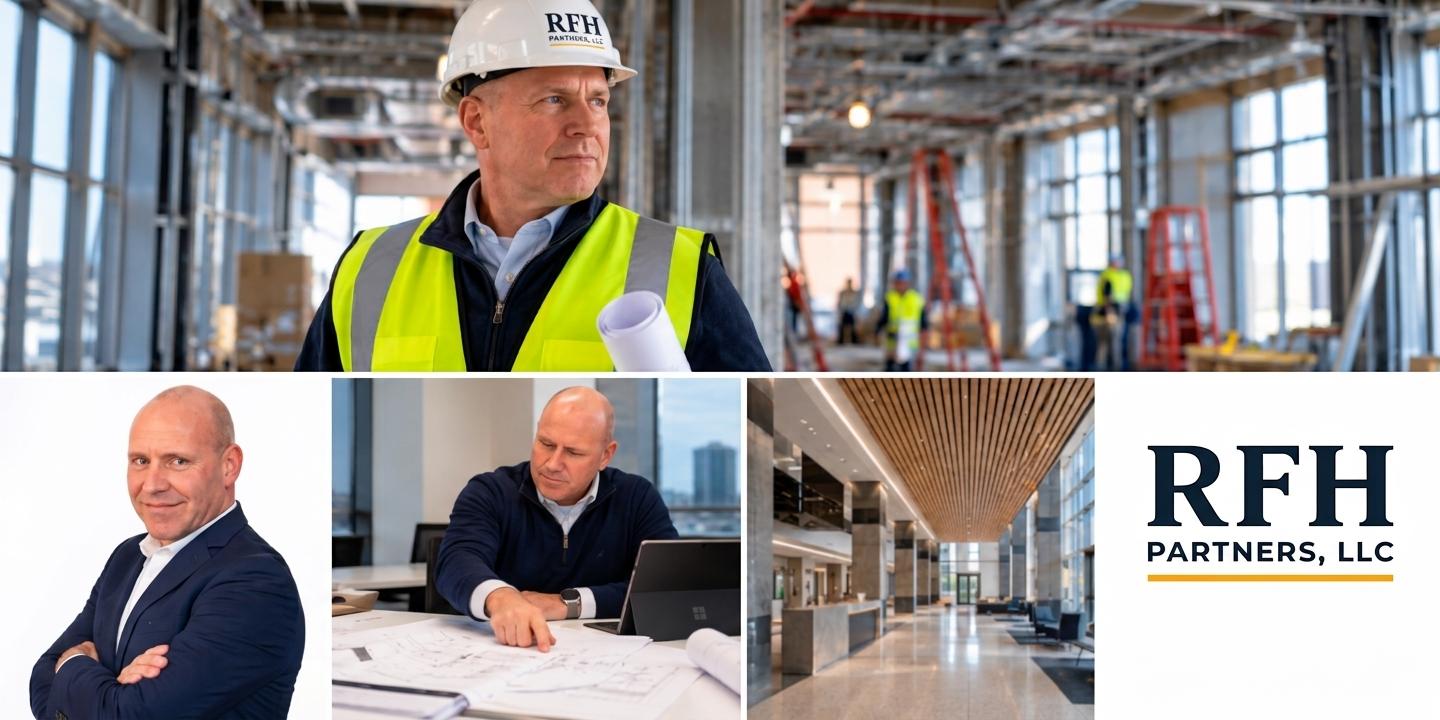
Construction documents do not exist in isolation. They reflect decisions made by owners, contractors, architects, engineers, subcontractors, and field personnel as the work progresses. Understanding how those records relate to actual construction operations is often what gives the documents meaning.
Built for Attorneys Handling Complex Construction Matters
For counsel, a construction expert needs to understand more than terminology. The expert must be able to evaluate how contractual requirements translate into field operations and how project decisions affect scope, cost, schedule, quality, and performance.
Hession's experience managing contractors, subcontractors, owners, architects, engineers, schedules, budgets, and field conditions provides that practical foundation. RFH Partners also works with a team of experienced construction professionals across multiple disciplines and project types.
RFH Partners assists counsel with construction defects, contractor and construction manager standard of care, contractor performance, change orders and extra work, scheduling and delay issues, payment applications, cost overruns, cost-to-complete, corrective work, project risk assessment, and project documentation.
For attorneys, the value is straightforward: a clearer understanding of the construction record and how the evidence relates to the issues in dispute.
Review the Record Before the Record Becomes the Problem
Construction litigation can involve extensive documentation, competing narratives, and technically complex issues. Before those issues become central to a deposition, expert report, mediation, arbitration, or trial, counsel may benefit from having the project record examined through the lens of practical construction experience.
RFH Partners provides independent construction advisory and expert witness services nationwide for commercial and residential matters. Attorneys can also review Robert Hession's professional credentials through his JurisPro expert witness profile and SEAK Experts profile. Additional information about Robert Hession is available through his LinkedIn profile.
For attorneys handling complex construction matters, much of the evidence may already exist within the project record. The challenge is determining what the documents establish, where the records conflict, how they relate to actual field conditions, and what conclusions can reasonably be supported. RFH Partners brings more than 36 years of practical construction experience to that process, providing independent construction expert witness and advisory services nationwide in commercial and residential matters.

Juris Review Contributor
Covers corporate law and the profession itself, from deal work to the attorneys building the practice.
This article features partner, contributor, or branded content from a third party. Members of the Juris Review editorial staff were not involved in the creation of this content. All views and opinions are those of the contributor alone.