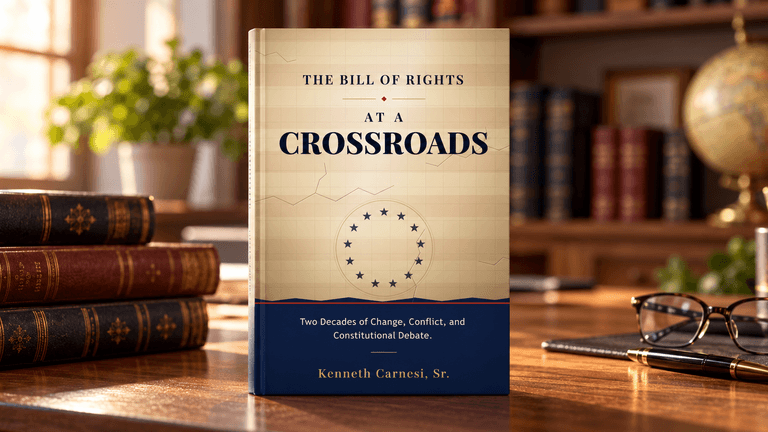
Kenneth Carnesi Reveals What Makes The Roberts Court So Influential In The Court At The Crossroads
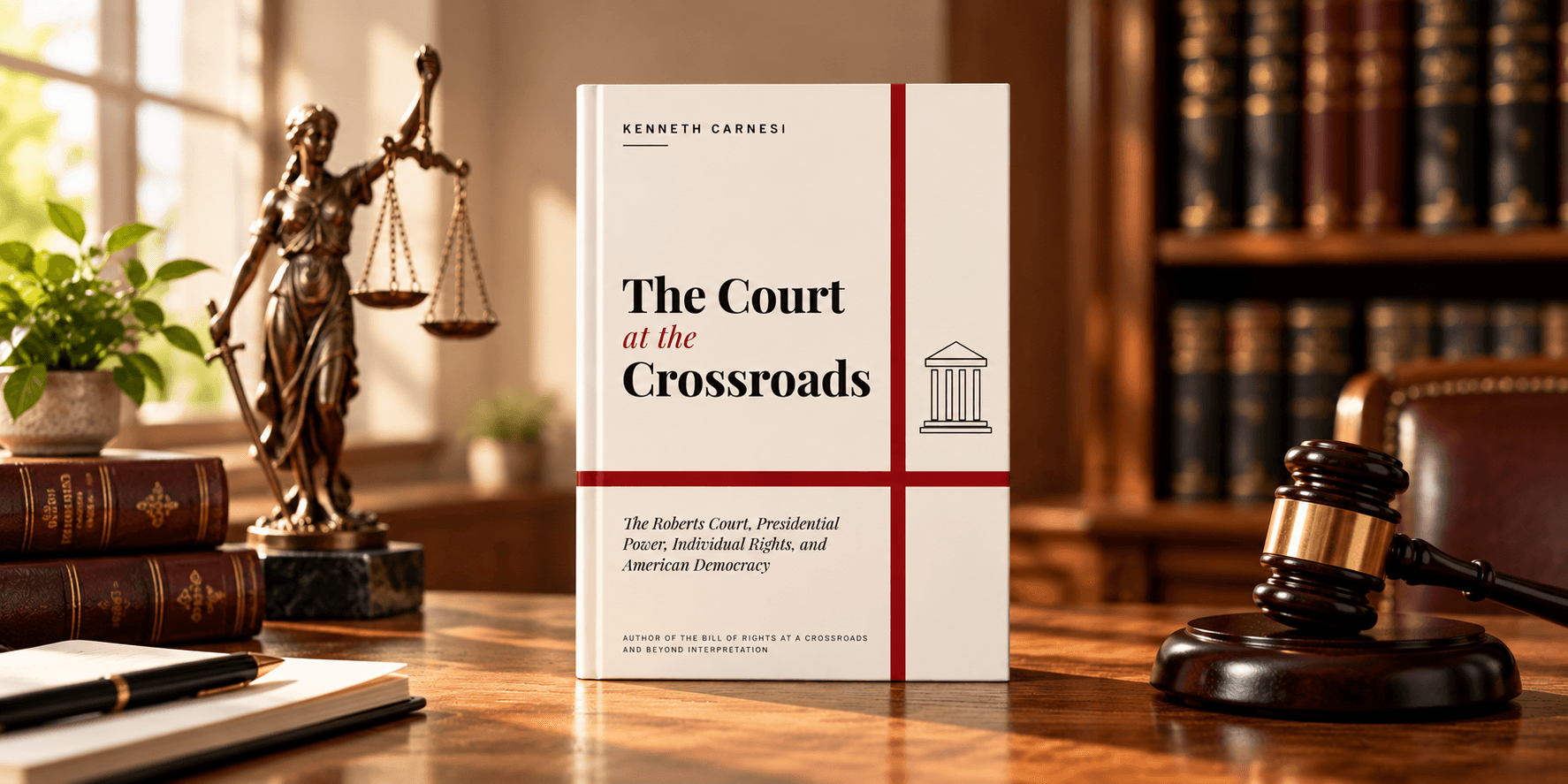
Kenneth Carnesi explores two decades of Supreme Court decisions, offering a balanced look at judicial power, constitutional rights, and democracy.
What Happens When The Supreme Court Changes The Meaning Of Power?
The Supreme Court can settle a legal dispute in a single ruling, but the consequences may influence American life for decades. A decision about presidential authority can reshape the relationship between branches of government. A ruling about individual rights can change how laws are enforced. Even questions involving federal agencies or elections can raise deeper concerns about who holds constitutional power and how that authority should be exercised.
For readers trying to understand these developments beyond headlines and public reactions, author Kenneth Carnesi offers a thoughtful examination in The Court at the Crossroads: The Roberts Court, Presidential Power, Individual Rights, and American Democracy. The book explores the Supreme Court under Chief Justice John Roberts, focusing on the reasoning behind major decisions rather than encouraging readers to adopt a particular interpretation.
Listed through Barnes & Noble in 2026 under ISBN 9798908584777, the publication examines two decades of judicial developments through sixteen chapters. At its center is a fundamental question: When the Supreme Court redraws the lines of constitutional power, who governs?
A Book Review Recognizes Kenneth Carnesi's Balanced Approach
Few American institutions generate as much public debate as the Supreme Court. Yet books examining its decisions often approach controversial issues through a particular ideological perspective.
Carnesi takes another path.
A review titled Book Review: The Court at the Crossroads offers this verdict:
“A clear, even-handed and deeply informed study of the Roberts Court. It is a rare Supreme Court book that respects readers enough to let them reach their own conclusions.”
The review praises Carnesi's ability to explain complicated judicial developments without turning constitutional analysis into political commentary. It describes the book as a scholarly examination that informs rather than argues and allows readers to consider competing interpretations independently.
Carnesi establishes this philosophy early in the book.
“A decision can be carefully reasoned and still be one you oppose. A decision you cheer can rest on thin reasoning,” he writes.
His approach separates legal reasoning from public reactions, allowing readers to evaluate the constitutional arguments supporting each decision.
The result is a book designed to encourage independent understanding rather than agreement with a particular judicial philosophy.
Sixteen Chapters That Explain The Roberts Court's Expanding Influence
One of the book's strengths is its comprehensive examination of the Supreme Court's responsibilities and influence.
Carnesi organizes sixteen chapters around the major constitutional questions that have shaped the Roberts Court.
Presidential authority receives attention through Trump v. United States (2024), which addressed presidential immunity for official acts. The discussion considers executive power and the constitutional separation of government responsibilities.
The book also examines federal administrative authority, including Loper Bright Enterprises v. Raimondo, which overturned the longstanding Chevron framework for judicial deference to federal agencies' interpretations of ambiguous statutes.
Individual liberties form another major area of analysis. Carnesi explores freedom of expression, online platforms, digital privacy, and Second Amendment decisions, including District of Columbia v. Heller, New York State Rifle & Pistol Association v. Bruen, and United States v. Rahimi.
Constitutional questions involving abortion after Dobbs v. Jackson Women's Health Organization also receive attention.
The book further examines voting rights following Shelby County v. Holder, partisan electoral maps after Rucho v. Common Cause, and the Court's emergency orders in election disputes.
Beyond individual cases, Carnesi considers judicial ethics, precedent, institutional legitimacy, and the Supreme Court's future.
Each chapter follows a practical structure. Readers encounter the legal dispute, the Court's decision, the justices' reasoning, the historical background, and the consequences for government institutions and ordinary citizens.
Why Kenneth Carnesi Believes Understanding Both Sides Matters
A defining feature of The Court at the Crossroads is its treatment of opposing judicial arguments.
Carnesi gives majority opinions and dissents careful consideration, explaining the legal principles behind each position without presenting disagreement as a contest between political teams.
For example, his discussion of Loper Bright considers competing views about administrative authority. Supporters of agency expertise emphasize the need for specialized knowledge when addressing technical regulatory questions. Critics raise concerns about accountability and the extent to which unelected agencies should interpret federal statutes.
By explaining these positions, Carnesi demonstrates how constitutional disputes often involve competing principles rather than simple answers.
The book applies the same method to sensitive subjects, including abortion, firearm regulations, electoral district boundaries, and the Court's 2023 ethics controversy.
The accompanying review identifies this restraint as a major strength. Rather than celebrating or condemning judicial outcomes, Carnesi examines how authority has shifted among courts, states, federal institutions, and individuals.
This approach helps readers understand that changes in constitutional interpretation do not always follow a single direction.
Historical Decisions Reveal Why Today's Constitutional Questions Are Not Entirely New
Carnesi also demonstrates that understanding the modern Supreme Court requires examining the decisions that came before it.
His historical discussion begins with Marbury v. Madison in 1803, which established the foundation of judicial review.
Modern questions involving presidential power are considered alongside Youngstown Sheet & Tube Co. v. Sawyer and United States v. Nixon.
The book also revisits Plessy v. Ferguson, Lochner v. New York, and Korematsu v. United States, illustrating how judicial interpretations can be challenged and reconsidered over time.
Carnesi draws on Alexander Hamilton's Federalist No. 78 to examine the relationship between judicial independence and public confidence.
This historical framework helps readers follow the Court's evolution from the closely divided decisions associated with Justice Anthony Kennedy's tenure to the subsequent six to three conservative majority.
The concluding chapter connects these developments through four continuing tensions: liberty and regulation, national and state power, precedent and change, and independence and accountability.
Rather than presenting these questions as settled, Carnesi explains why they remain central to constitutional interpretation.
A Resource For Readers Who Want To Understand More Than Courtroom Outcomes
Although The Court at the Crossroads examines complex constitutional questions, its structure makes the material accessible to readers outside the legal profession.
Legal terms such as precedent and judicial review receive clear explanations, while recurring concepts help readers develop familiarity with the Court's methods.
Attorneys, law students, educators, journalists, civic leaders, and readers interested in American government may find value in its combination of history and judicial analysis.
Carnesi describes his goal as helping readers “read a new Supreme Court decision, find its main argument and see what it changes and what it leaves open.”
That objective captures the publication's central purpose: helping readers understand the reasoning behind decisions rather than relying exclusively on public commentary.
Explore The Court At The Crossroads By Kenneth Carnesi
Supreme Court decisions continue to shape the relationship between government authority and individual freedom. Understanding those decisions requires more than recognizing the names of landmark cases. It requires examining the constitutional reasoning, historical context, and competing interpretations that influence judicial outcomes.
The Court at the Crossroads provides that perspective through a structured examination of the Roberts Court and its role in American constitutional government.
Readers interested in exploring the publication and discovering more of Carnesi's work can visit Kenneth Carnesi's official book collection or explore his publications and author information through the official Kenneth Carnesi author website. The book is also listed through Barnes & Noble under ISBN 9798908584777.
For anyone seeking a clearer understanding of how Supreme Court decisions influence American institutions, Kenneth Carnesi's book offers an opportunity to examine the reasoning behind the rulings and develop an informed perspective of their own.

Juris Review Contributor
Covers the Supreme Court and the federal bench, reading the opinions and what they change.
This article features partner, contributor, or branded content from a third party. Members of the Juris Review editorial staff were not involved in the creation of this content. All views and opinions are those of the contributor alone.