
New Book by Kenneth Carnesi Shows How Twenty Years of Courts, Technology and Crisis Have Reshaped the Bill of Rights
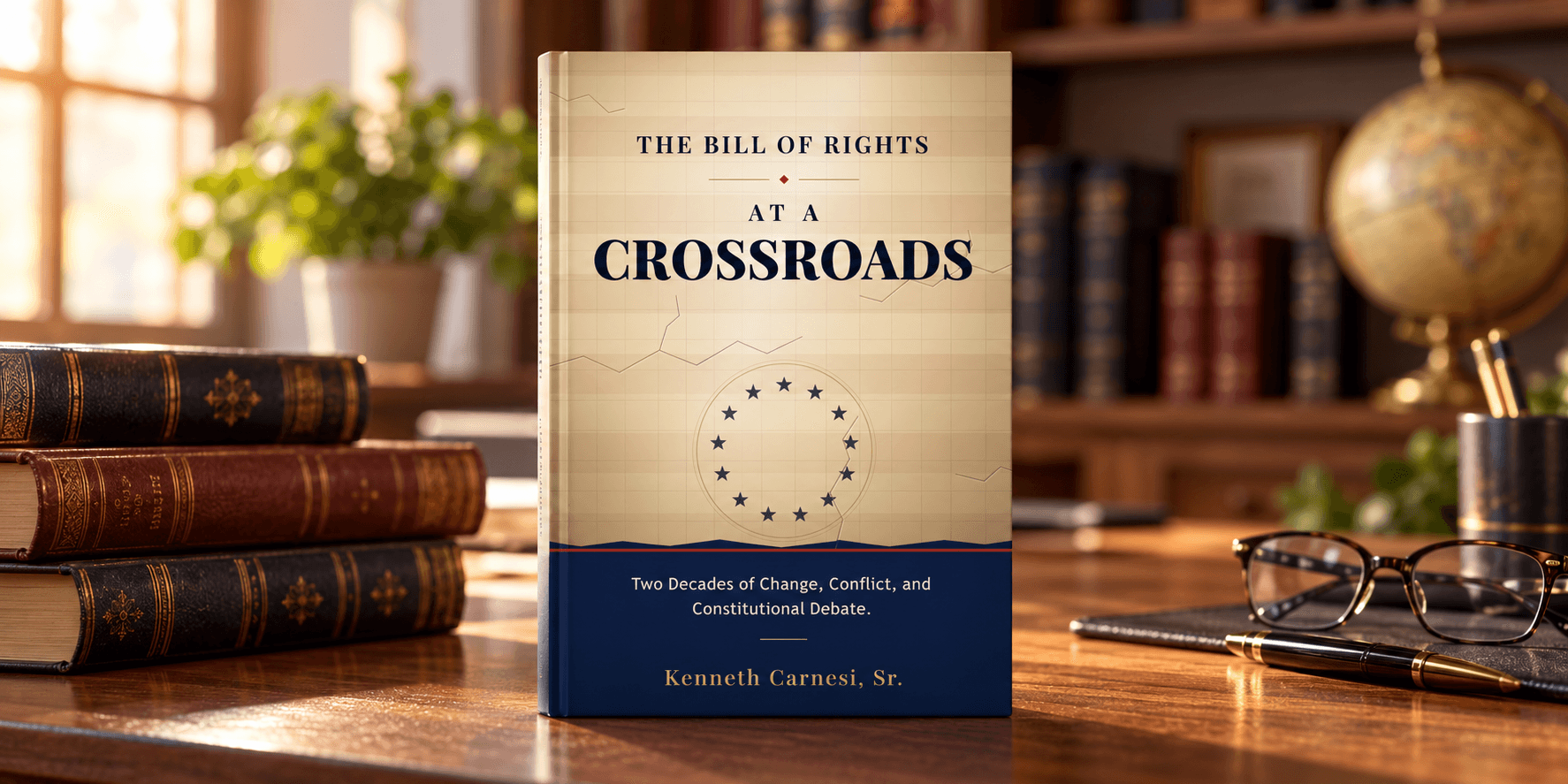
The Bill of Rights At A Crossroads offers lawyers, students and citizens a balanced guide to today's constitutional debates.
Smartphone searches, campus speech fights, emergency powers, public defense and gun regulation have pushed the Bill of Rights into the headlines again and again over the past two decades. In The Bill of Rights At A Crossroads, author Kenneth Carnesi traces how each of the first ten amendments has been tested since the mid-2000s — and shows why a right can grow weaker or stronger without a single word of its 1791 text changing.
As Supreme Court decisions shift doctrine term after term, the book gives readers what most coverage leaves out: the legal tests courts apply, the reasoning on both sides, and the practical gap between a right on paper and a right a person can use.
Inside the Book
The book moves from foundations to front-line disputes to the forces that change constitutional law, in three parts and 16 chapters:
- Part I, The Framework (Chapters 1–3): what the amendments promise and where those promises stop; who enforces them, from courts and legislatures to agencies, states and citizens; and how incorporation carried national rights into every state.
- Part II, Rights Under Pressure (Chapters 4–12): speech and protest, including online speech and government pressure on platforms; religious exemptions; digital privacy and facial recognition; traffic stops, body cameras and use of force; detention and emergency powers; public defense, plea bargaining and fines and fees; sentencing, solitary confinement and capital punishment; the Second Amendment; and the often-overlooked Ninth and Tenth Amendments.
- Part III, How Rights Change (Chapters 13–16): precedent and judicial appointments, technology that outpaces the law, crises and their lasting exceptions, and the role journalists, advocates, litigants and voters play in defending rights.
A concluding chapter weighs which protections have grown stronger, which remain vulnerable, and which choices will shape the next twenty years.
Why It Stands Out as Legal Commentary
- It follows holdings, not headlines. The book separates the rule a court needed to decide a case from everything else in the opinion, then tracks how later courts narrowed, distinguished or overruled it. Landmark decisions from Gideon v. Wainwright and Mapp v. Ohio to Riley v. California, Carpenter v. United States, Kennedy v. Bremerton School District and New York State Rifle & Pistol Association v. Bruen are explained on their own terms.
- It keeps text, doctrine and practice separate. Readers see what the amendment says, what the courts have made of it, and how it is actually applied in police stations, courtrooms and school offices.
- It confronts the gap between rights and results. Three recurring problems — access to courts and counsel, uneven enforcement, and the limits of remedies — show how much a right is worth in daily life.
- It is rigorously even-handed. Every major dispute is presented with the majority's reasoning, the dissent's arguments and the strongest positions of advocates on each side. The book does not tell readers which side is right; the judgment belongs to them.
- It is built for study and reference. Each chapter closes with a real-world case study and a key court decision, making the book easy to teach from, cite and return to.
From the Author
“The words of the Bill of Rights have stayed on the page since 1791,” said Carnesi. “What has changed is who reads them, how they read them, and what those readings mean for a person standing at a traffic stop or a courthouse door. I wrote this book so readers could see the reasoning on every side and decide for themselves.”
Who Should Read It
- Attorneys, law students and pre-law readers who want a current map of constitutional doctrine
- Educators teaching civics, government or constitutional law
- Journalists, policymakers and advocates covering civil liberties
- Any citizen who wants to understand the rights debates behind today's news
About the Author
Kenneth Carnesi, Sr., is COO of Anaptyx MSP and founder of the Anaptyx CivicConnect™ dedicated BEAD Program team. He is the author of BEAD: Unlocking the Future, named Best Broadband Policy & Strategy Book by USToday Magazine in August 2026, and Collateral Courage. He has been named the Best Business Guidebook Author in South Carolina and the Best New Inspirational Book Author in South Carolina. His book After The Fall won a Literary Titan Gold Book Award, and Unfinished Business won an International Impact Book Award. The Bill of Rights At A Crossroads brings his practical, plain-language approach to the constitutional questions shaping American public life.
Availability
The Bill of Rights At A Crossroads is now available in paperback at www.books.by/kenneth-carnesi-sr and at www.kennethcarnesiauthor.me. Review copies and interviews are available on request.

Juris Review Contributor
Covers the Supreme Court and the federal bench, reading the opinions and what they change.
This article features partner, contributor, or branded content from a third party. Members of the Juris Review editorial staff were not involved in the creation of this content. All views and opinions are those of the contributor alone.